Problem & Context (Initial Idea)
Many existing homes were not designed for ageing occupants, resulting in avoidable safety risks, reduced independence, and diminished resale value. Drawing on my background in building design, I explored how homeowners might assess accessibility issues independently, without requiring specialist visits or formal audits.
Early Hypothesis
My initial hypothesis was that an AR-based tool could guide homeowners through a self-assessment, highlighting potential accessibility risks in real time (e.g. steps, lighting, reach zones). This approach was appealing due to its spatial alignment with the problem, but carried clear risks around adoption, cognitive load, and trust for an older user group.
Evaluation & Course Correction
I evaluated the hypothesis through a combination of AI-assisted research, competitive review, and constraint analysis, using AI outputs as a rapid way to surface patterns and stress-test assumptions rather than as decision inputs. https://chatgpt.com/s/dr_686c99d4ff9881918e65e892d1355d72
Competitior Analysis
Existing solutions such as Strolll and Rebokeh demonstrate strong use of immersive and vision-based technology, but are primarily positioned around rehabilitation or specialist contexts rather than everyday homeowner self-assessment. This highlighted a gap between technical capability and practical, trust-based adoption in domestic settings.
https://strolll.co https://www.rebokeh.com
ICP
The initial assumption was that primary users would be homeowners aged 65+, with varying levels of technical confidence. As the work progressed, this assumption proved too simple: comfort with technology, risk tolerance, and desire for autonomy varied more meaningfully than age alone.
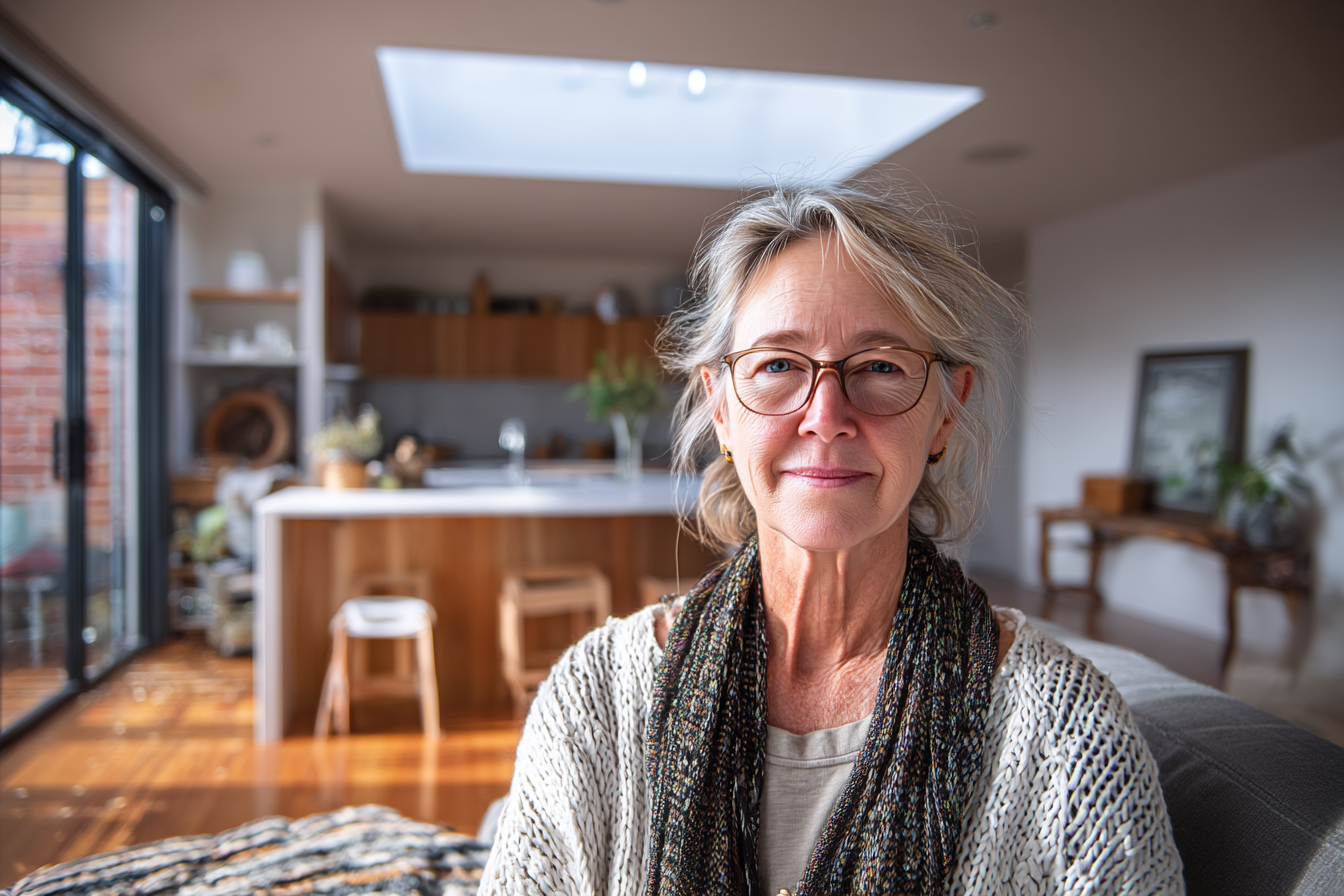 Persona (Midjourney)
Distinctive Market Opportunities
As the exploration progressed, I recognised that I was increasingly designing toward a solution rather than validating the underlying need. Several concepts scored well on novelty and feature appeal, but performed poorly when evaluated against adoption risk, user trust, and the likelihood of sustained use.
Resulting Product Direction
The key outcome of this phase was the decision not to pursue an AR-first solution. While spatial overlays aligned well with the problem conceptually, they introduced unnecessary friction for the target users and did not deliver proportional value over more familiar mobile or web-based approaches. Uploading an image to AI already has a similiar desired affect as the solution proposed.
Idea Formulation Analysis
An AR-assisted safety guidance concept emerged as the most promising spatial application. However, further reflection showed that the same core value — hazard awareness and prioritisation — could be delivered more effectively through conventional interfaces, reserving AR for future, optional use rather than as a primary interaction mode.
Information Architecture
I outlined a minimal set of screens required to support assessment, guidance, and follow-up actions, focusing on clarity and progressive disclosure rather than feature breadth. I used AI for the required screens based on the user stories with a simple description on why each screen was needed.
Marketing website Wireframes (Relume)
Early wireframes were produced to validate structure and onboarding flow. These served as a first pass to test information hierarchy rather than a final interaction model.
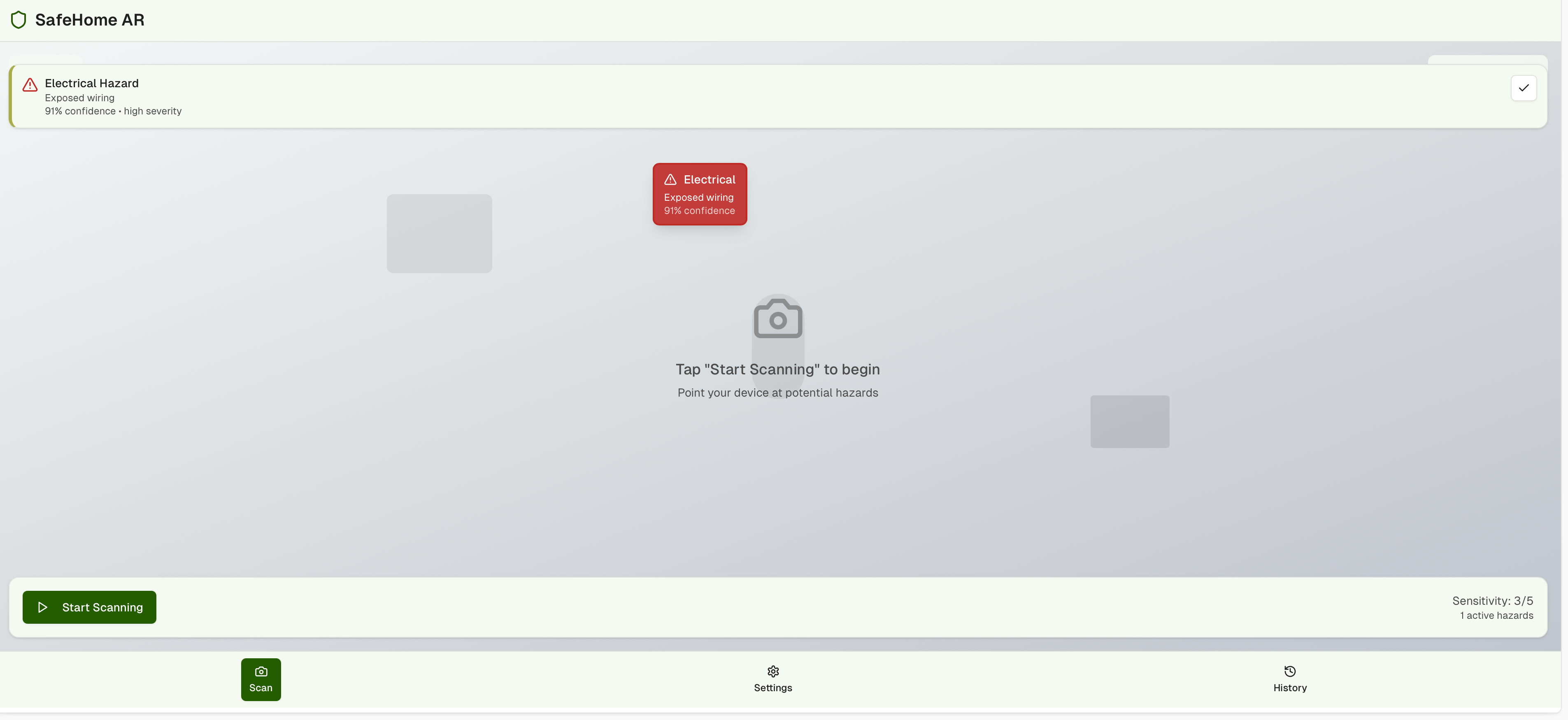 Concept Wireframe
https://v0.app/chat/prototype-plan-mmbDHC3aH1K
Concept Wireframe
https://v0.app/chat/prototype-plan-mmbDHC3aH1K
What I’d do next (with constraints)
- Validate comprehension and trust with older homeowners using low-fidelity prototypes
- Test language and visual metaphors that communicate risk without relying on probabilistic scores
- Reintroduce spatial or AR elements only where they demonstrably reduce effort rather than add novelty
Learnings
This project reinforced the importance of treating AI as a generative aid rather than a source of product truth, particularly in domains where trust and comprehension are critical.