About Project
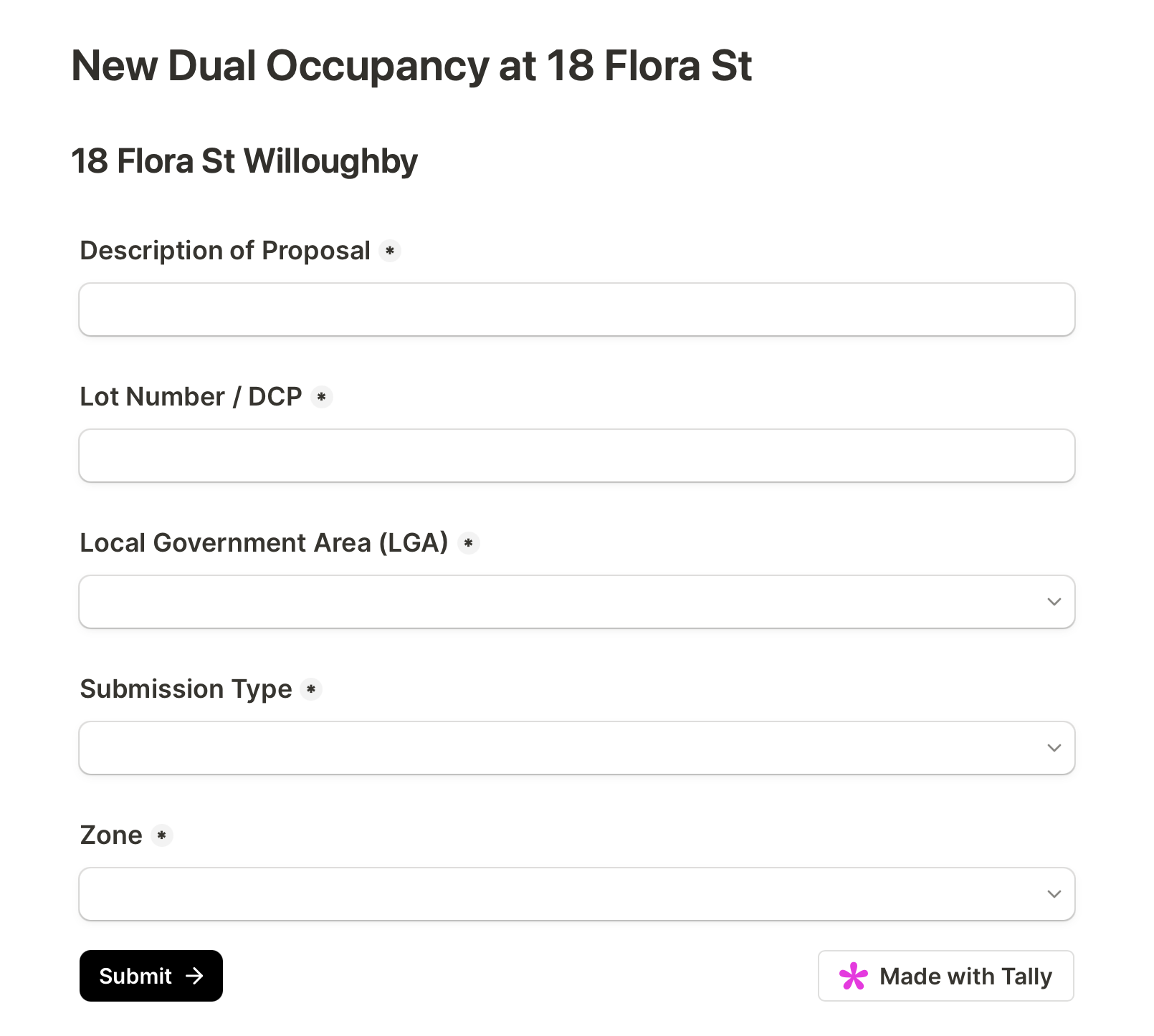
This project explored how to reduce duplicated data entry and information drift across design documentation and council submission forms in residential building workflows. The goal was to minimise submission risk, reduce avoidable rework, and improve confidence in regulatory compliance.
User Problem
Building designers are required to enter the same project information multiple times across drawings, schedules, and council submission forms. This duplication increases time spent on low-value work and introduces risk: inconsistencies between documents are a common cause of submission rejection and approval delays.
Constraint & Course Correction
An early concept explored consolidating submission data into a standalone form that could populate multiple outputs. However, this approach conflicted with established industry behaviour. Designers strongly prefer working inside trusted, legacy tools, and are accustomed to extending them via plugins rather than introducing parallel systems. Reframing the solution as a plugin integrated into existing CAD workflows significantly reduced adoption risk and aligned with established trust patterns.
Solution
The proposed solution is a lightweight plugin that centralises project metadata and propagates updates across drawings and submission outputs automatically. Rather than replacing existing tools, the plugin augments established workflows, reducing duplicate effort while preserving user control and auditability.
Learnings
- Trust and workflow continuity are more important than novelty in regulated industries
- Reducing error risk can be a stronger value proposition than saving time alone
- Integration beats replacement when working with legacy professional tools
Next steps
- Validate adoption preference between embedded plugin workflows and external tools with practising designers
- Assess error reduction and update reliability across real submission scenarios
- Explore phased rollout starting with read-only validation before write-back automation